The Ghost of the 4,000-Meter Abyss
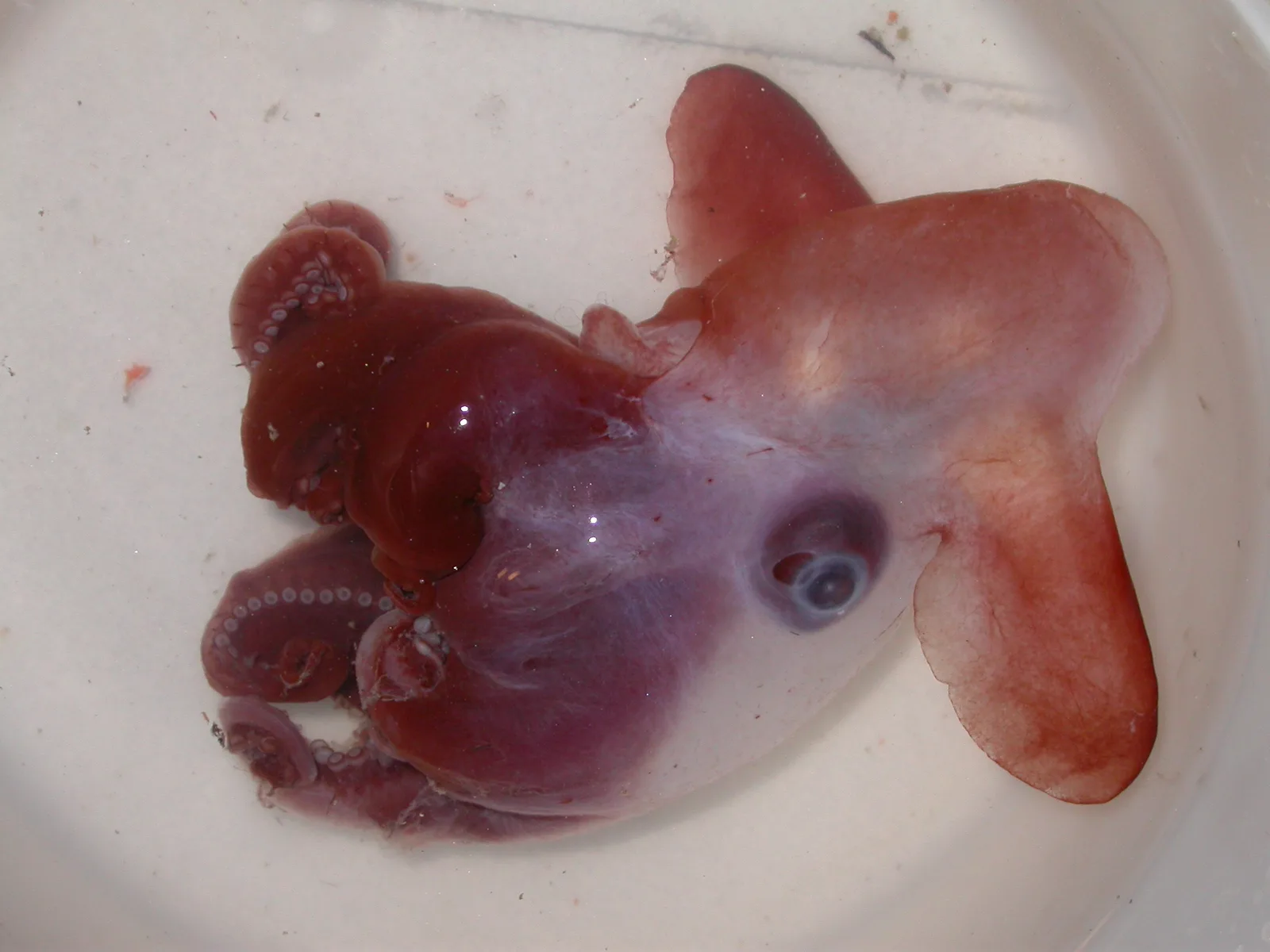
First filmed by the NOAA Ship Okeanos Explorer off the Hawaiian Archipelago at a depth of 4,290 meters (2.6 miles), the Casper octopus is the deepest-dwelling incirrate (true) octopus ever documented.
Unlike shallow-water octopuses, it lacks pigment-producing chromatophore cells and dense musculature. Its body appears milk-white and translucent, with internal organs and optic nerves faintly visible through its gelatinous skin.
Four-Year Maternal Devotion on Metal Nodules
In the vast muddy desert of the abyssal plain, solid attachment points are exceptionally rare. Female Casper octopuses search for dead sponge stalks anchored to hard manganese nodules to cement their egg clusters.
Once the eggs are laid, the mother wraps her arms around the clutch and remains completely motionless for four or more years. She does not feed during this entire incubation period, sacrificing her body to protect the developing young against silt accumulation and scavenging crabs.
Deep-Sea Mining Vulnerability
Because Casper octopuses depend strictly on manganese nodules for reproduction, they face severe threats from proposed deep-sea seabed mining operations.
Manganese nodule fields take millions of years to precipitate from seawater. The removal of these metallic crusts eliminates essential breeding habitat for benthic cephalopods and associated deep-water sponge communities.