The Radar-Eared Acrobat of the Savannah
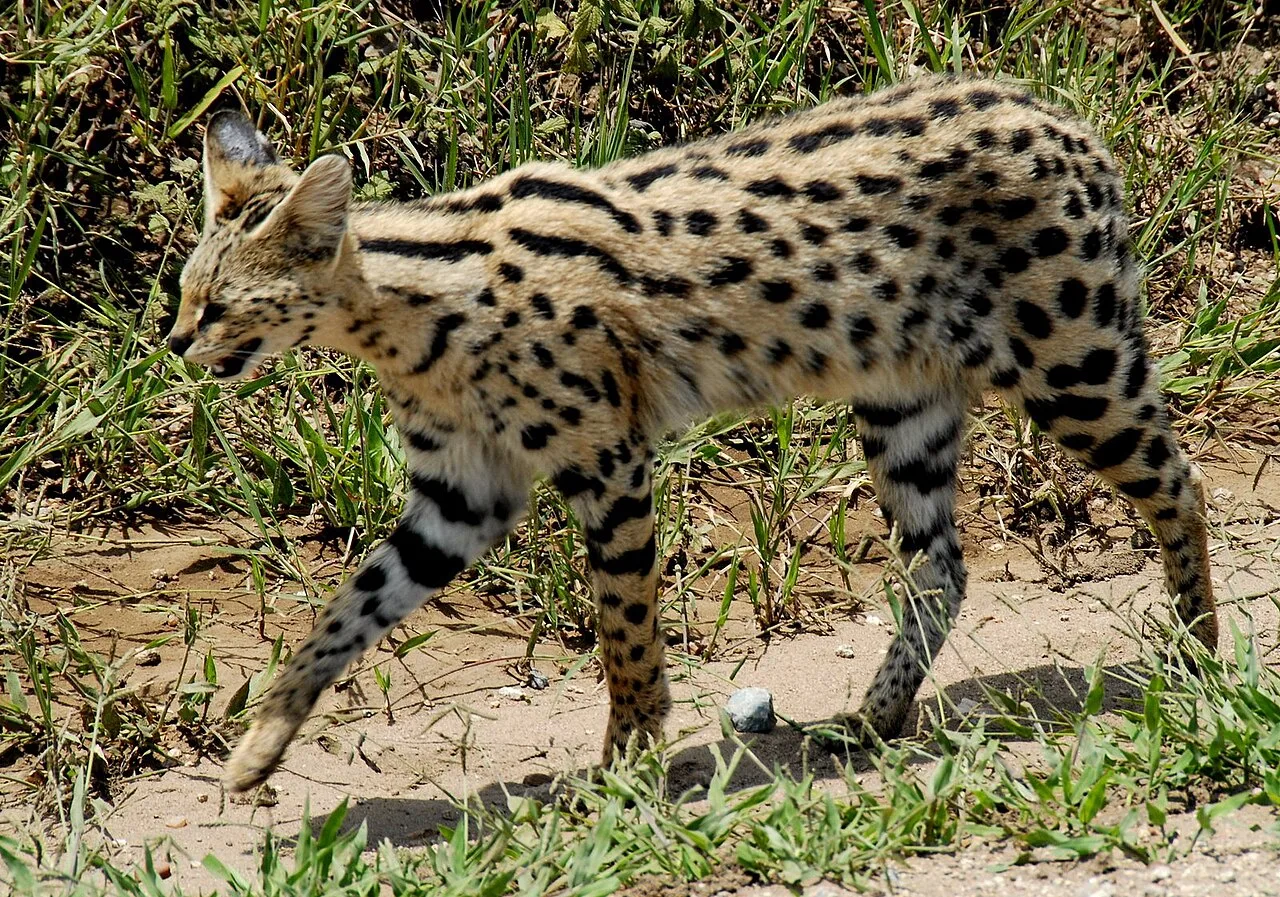
With the longest legs and largest ears relative to body size of any felid on Earth, the serval (Leptailurus serval) is precision-engineered for hunting hidden prey in tall grass. Reaching shoulder heights of 60 centimeters (24 inches) on a slender frame of barely 15 kilograms, this solitary wildcat towers above savannah vegetation with effortless grace.
The serval’s enormous, oval ears act like parabolic radar dishes. Controlled by 30 independent auricular muscles, they pivot independently to triangulate the faintest rustling of a vlei rat moving through grass stems or even burrowing underground. When target coordinates are locked, the serval freezes, crouches low, and launches a dramatic 2.7-meter (9-foot) vertical leap into the air, folding its front paws downward to slam onto the prey with crushing kinetic force.
Acoustic & Jump Capabilities:
- Hunting Success Rate: 50% kill efficiency (nearly double that of lions or leopards)
- Vertical Leap: 2.7 meters (9 feet) high to catch flushed gamebirds in mid-air
- Horizontal Leap: Up to 3.6 meters (12 feet) from a stationary stance
- Acoustic Frequency: Detects ultrasonic rodent vocalizations up to 80 kHz
Unrivaled Hunting Efficiency in Marsh Grass
While apex predators like lions and cheetahs succeed in fewer than 25 percent of their hunting attempts, the serval boasts a remarkable 50 percent kill rate. It can leap straight up into dense bushes to snatch startled doves in mid-flight or hook fish out of marsh shallows with lightning-fast paw flicks.
Servals are strongly associated with moist savannahs and reed-choked wetland borders where rodent densities peak. Their tawny coats, patterned with bold black spots and longitudinal neck stripes, provide flawless disruptive camouflage in dappled grassland sunlight, keeping them hidden from competing hyenas and leopards.