The Weasel-Cat of the Neotropics
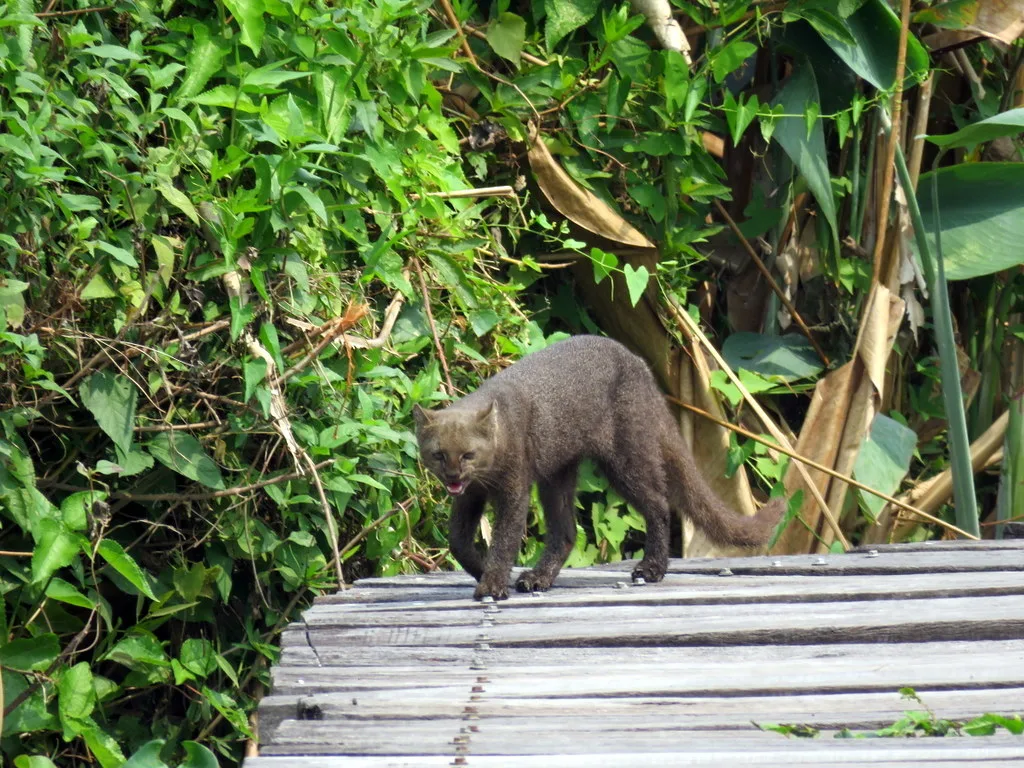
Defying almost every traditional feline design convention, the jaguarundi (Herpailurus yagouaroundi) looks more like a cross between an otter and a giant weasel than a typical jungle cat. With an elongated, low-slung muscular torso, short legs, small rounded ears, and a long slender tail, it weaves through tangled tropical thorn scrub and dense riverbank undergrowth with effortless fluid agility.
Unlike most nocturnal wildcats, the jaguarundi hunts almost exclusively during full daylight hours. Its uniform unspotted coat, which ranges from smoky charcoal-gray to vibrant reddish-chestnut, allows it to blend into dry leaf litter and dappled woodland shadows. When stalking ground-dwelling tinamous, quail, and spiny rodents, the jaguarundi bursts forward at high speed and can launch itself 2 meters (6.5 feet) straight up into the air to swat birds taking flight.
Acoustic & Tactical Profile:
- Vocal Repertoire: 13 distinct call types including chirps, chitters, and whistles
- Vertical Leap: 2 meters (6.5 feet) from a standing position
- Diurnal Schedule: 85% of active hunting occurs in bright daylight
- Body Ratio: Low center of gravity with body length over 70 cm and legs under 25 cm
Avian Mimicry and Tree Canopy Agility
One of the jaguarundi’s most bizarre biological adaptations is its voice. Rather than standard feline meows and purrs, it produces bird-like whistles, high-pitched chirps, and clicking vocalizations that mimic avian calls. Field naturalists have documented jaguarundis using these soft whistling calls to attract curious ground birds toward dense ambush cover.
While spending most of its time hunting on the ground, the jaguarundi is an accomplished climber and strong swimmer. It readily crosses wide lowland rivers to colonize new hunting grounds and can run headfirst down tree trunks thanks to flexible ankle joints and semi-retractile claws.