The Biological Taxidermy Hoax
When British scientists first received a preserved Platypus (Ornithorhynchus anatinus) specimen from Australia in 1799, they assumed it was a practical joke. Zoologist George Shaw even took a pair of scissors to the pelt trying to find the stitches where someone had supposedly sewn a duck bill onto a beaver’s body.
“Male platypuses possess sharp, hollow spurs on their hind ankles connected to crural venom glands. The venom is so excruciating that standard painkillers like morphine cannot stop the agony.”
40,000 Underwater Electric Sensors
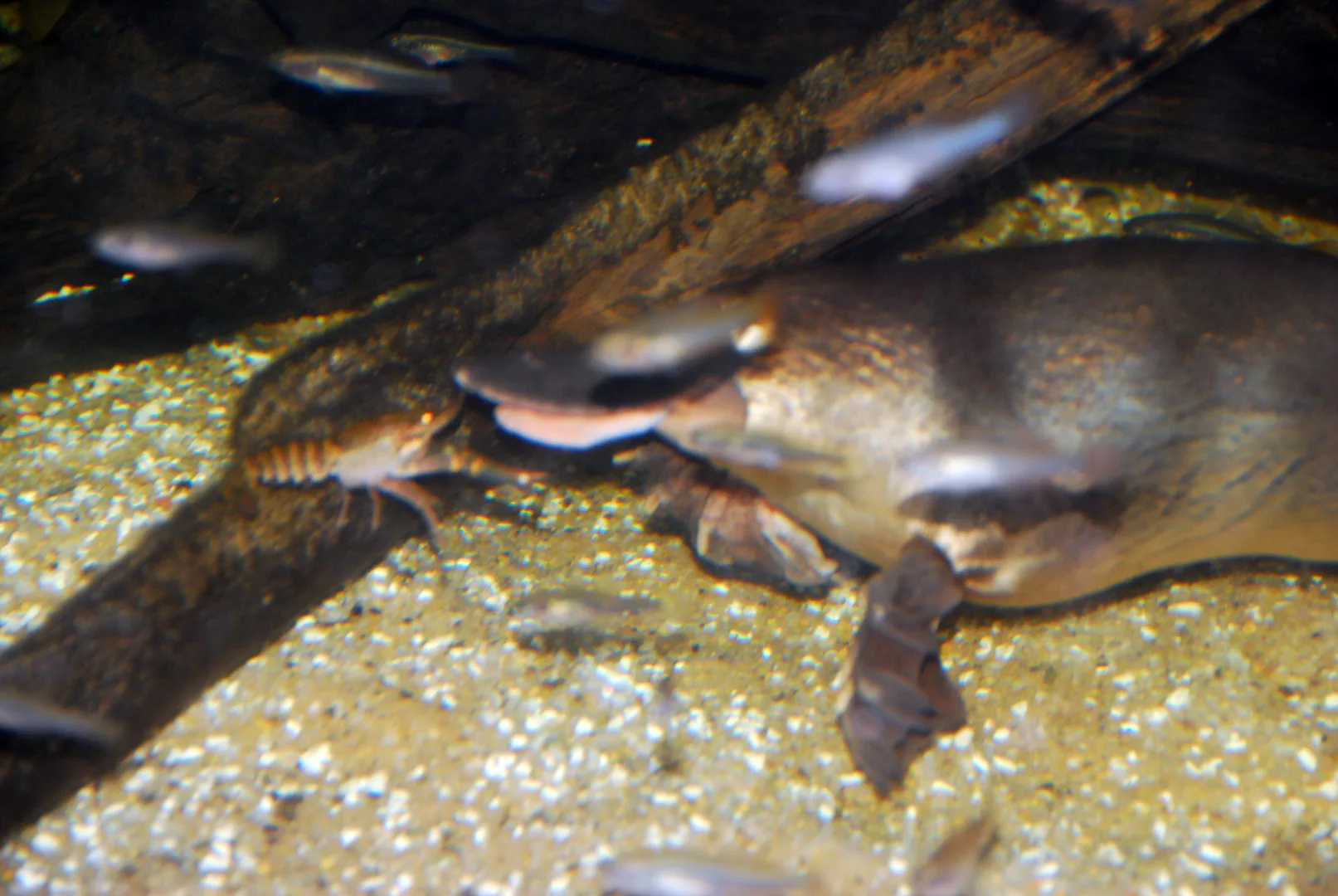
When a platypus dives underwater to hunt, it closes its eyes, ears, and nostrils completely. It navigates in pitch-black river silt using pure electrolocation. Its rubbery bill is packed with 40,000 electroreceptors and 60,000 mechanical push-rod sensors, detecting the faint electrical pulses produced by the contracting muscles of swimming shrimp. To top it off, shining a blacklight on a platypus makes its fur glow vibrant cyan-green through biofluorescence.