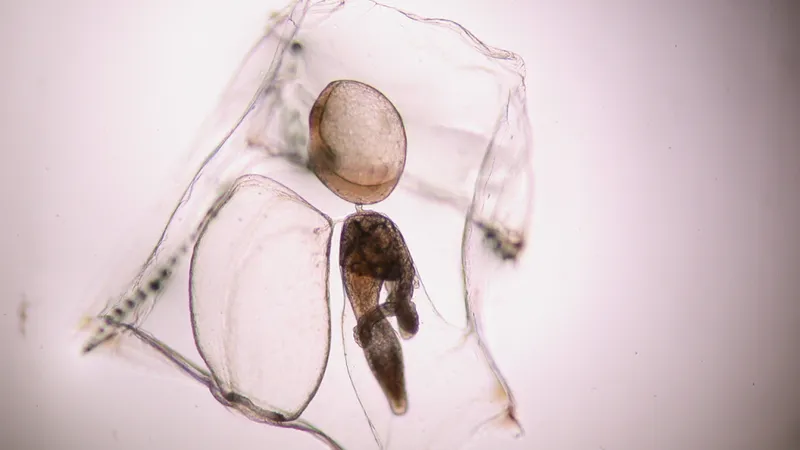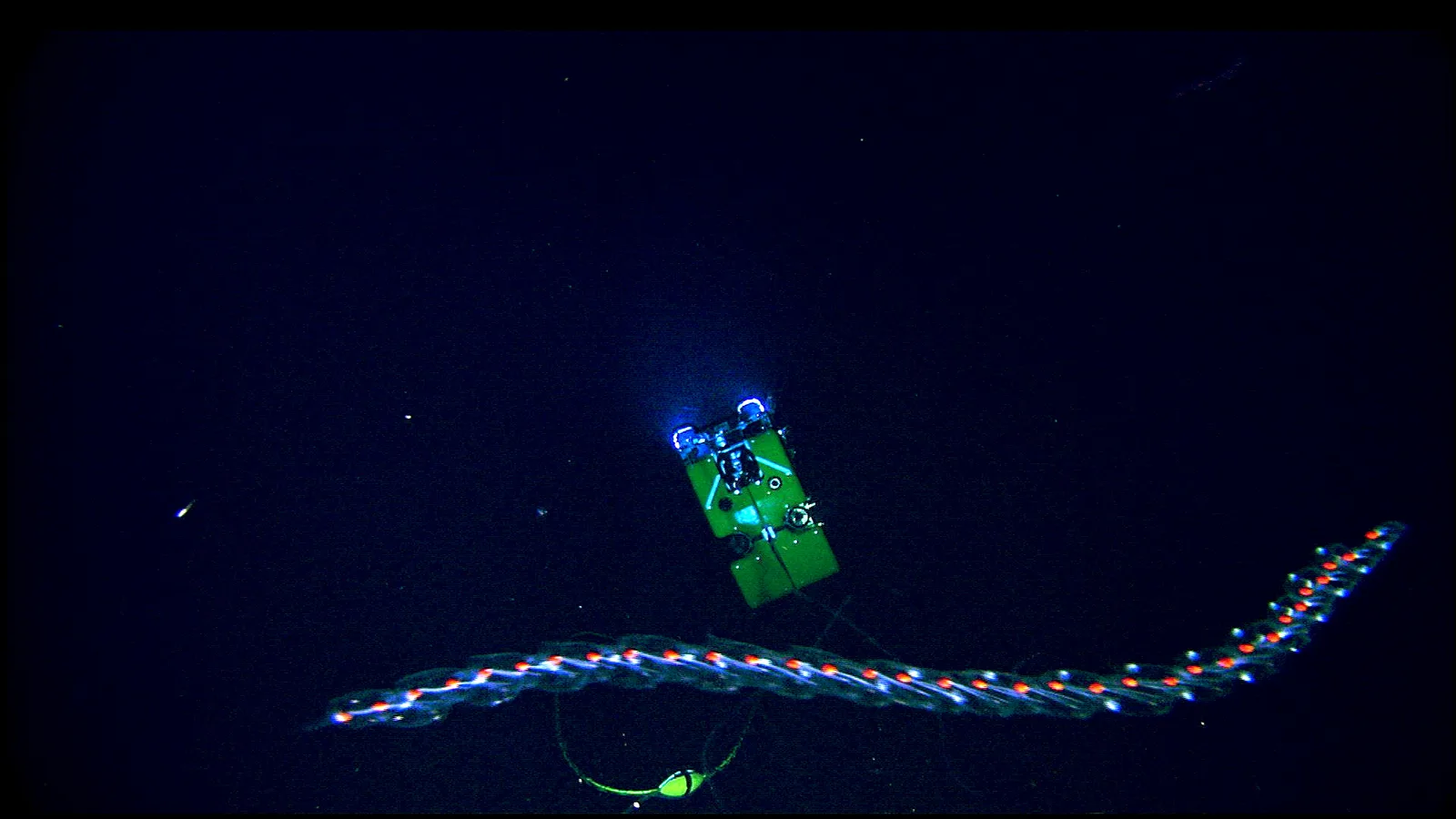
Flying Spaghetti Monster (IFE, URI-IAO, UW, Lost City Science Party; NOAA/OAR/OER; The Lost City 2005 Expe).
The Living Web of Clones
Filmed in 4K by remotely operated submersibles along offshore oceanic ridges, Bathyphysa conifera looks like a tangled clump of boiled pasta suspended in midwater.
It is not a single organism, but a complex colony of specialized zooids that share a continuous digestive tract and nervous system. Each individual zooid evolves into a dedicated functional organ: swimming bells (nectophores), feeding polyps (gastrozooids), or reproductive clusters (gonozooids).
Deadly Midwater Drift Nets
Dozens of white feeding gastrozooids protrude outward like twisted strands. Each polyp anchors long contractile tentacles lined with batteries of pressurized stinging nematocysts.
Drifting passively with deep ocean currents, the colony spreads its appendages into a wide three-dimensional web. When a passing deep-sea crustacean or lanternfish brushes against a tentacle, neurotoxins paralyze the prey in milliseconds before the polyp reels it into its mouth.
Pneumatophore Gas Float Navigation
At the apex of the colony sits a small, gas-filled bulb called the pneumatophore. By regulating carbon monoxide concentrations inside this chamber, the siphonophore adjusts its vertical position across water layers.
When threatened by predators, the colony rapidly contracts its entire stem, shrinking from several meters across into a tight knot within seconds.