The 45-Meter Abyssal Spiral
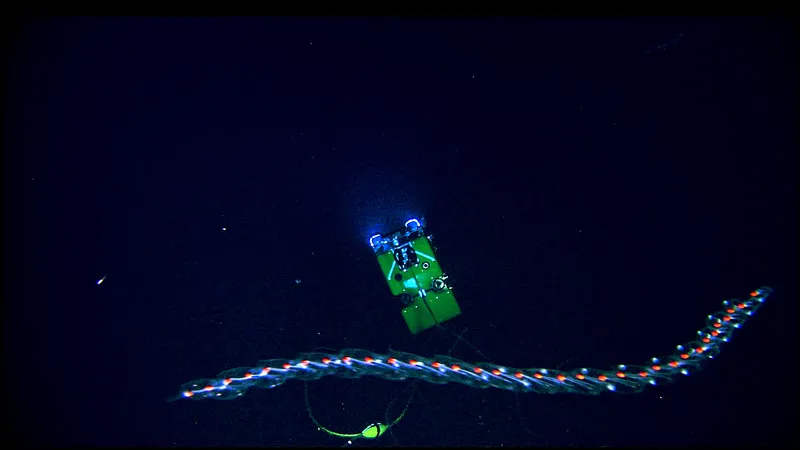
Discovered in Ningaloo Canyon by the Schmidt Ocean Institute’s research vessel Falkor, this giant siphonophore was measured at an estimated 46 meters (150 feet) in outer ring diameter, making it potentially the longest animal ever observed on Earth.
The organism forms a gigantic, slowly rotating spiral in the water column, creating an immense three-dimensional perimeter designed to intercept migrating pelagic life.
Millions of Interconnected Bodies
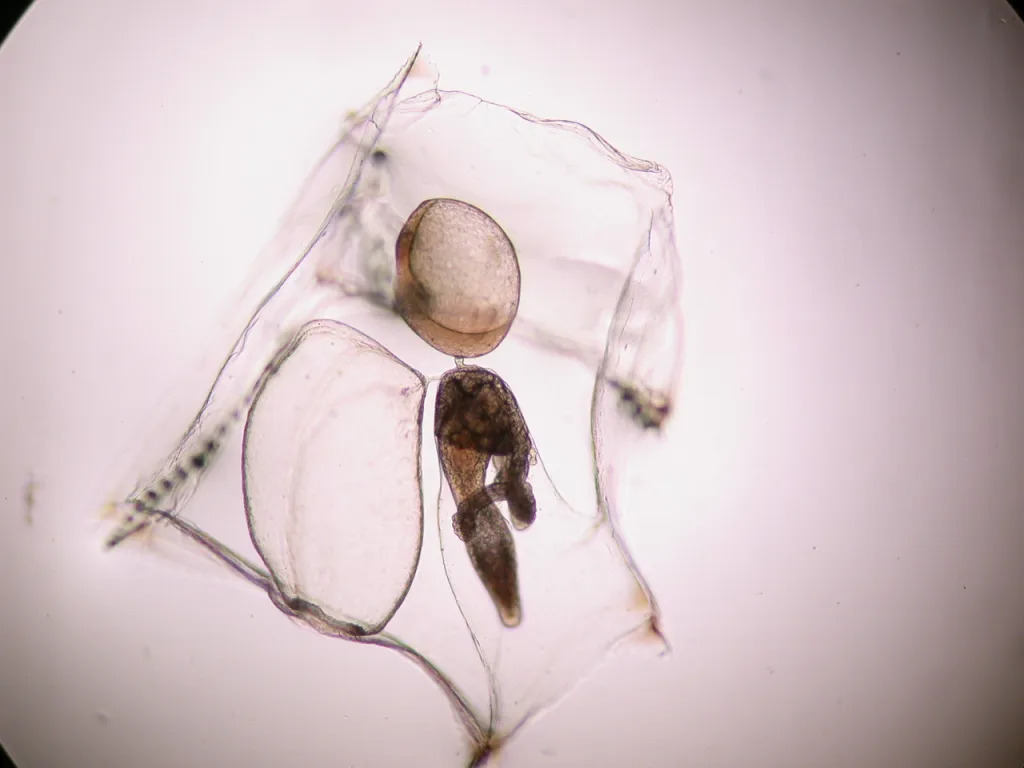
Like other siphonophores, Apolemia is a colonial organism comprised of millions of specialized zooids budded from a single fertilized egg.
Gastrozooids digest captured food and pump nutrients through a central circulatory stem, while dactylozooids deploy stinging tentacles and nectophores pulse rhythmically to maneuver the colossal structure through deep currents.
Bioluminescent Flash Traps
In the pitch-black bathypelagic zone, the giant siphonophore uses light as hunting bait. Modified tentacles emit rhythmic pulses of blue and green bioluminescence that mimic copepod swarms.
Curious deep-sea fish drawn toward the flickering light collide with clusters of harpoon-like stinging cells, which inject lethal neurotoxins before the fish can break free.