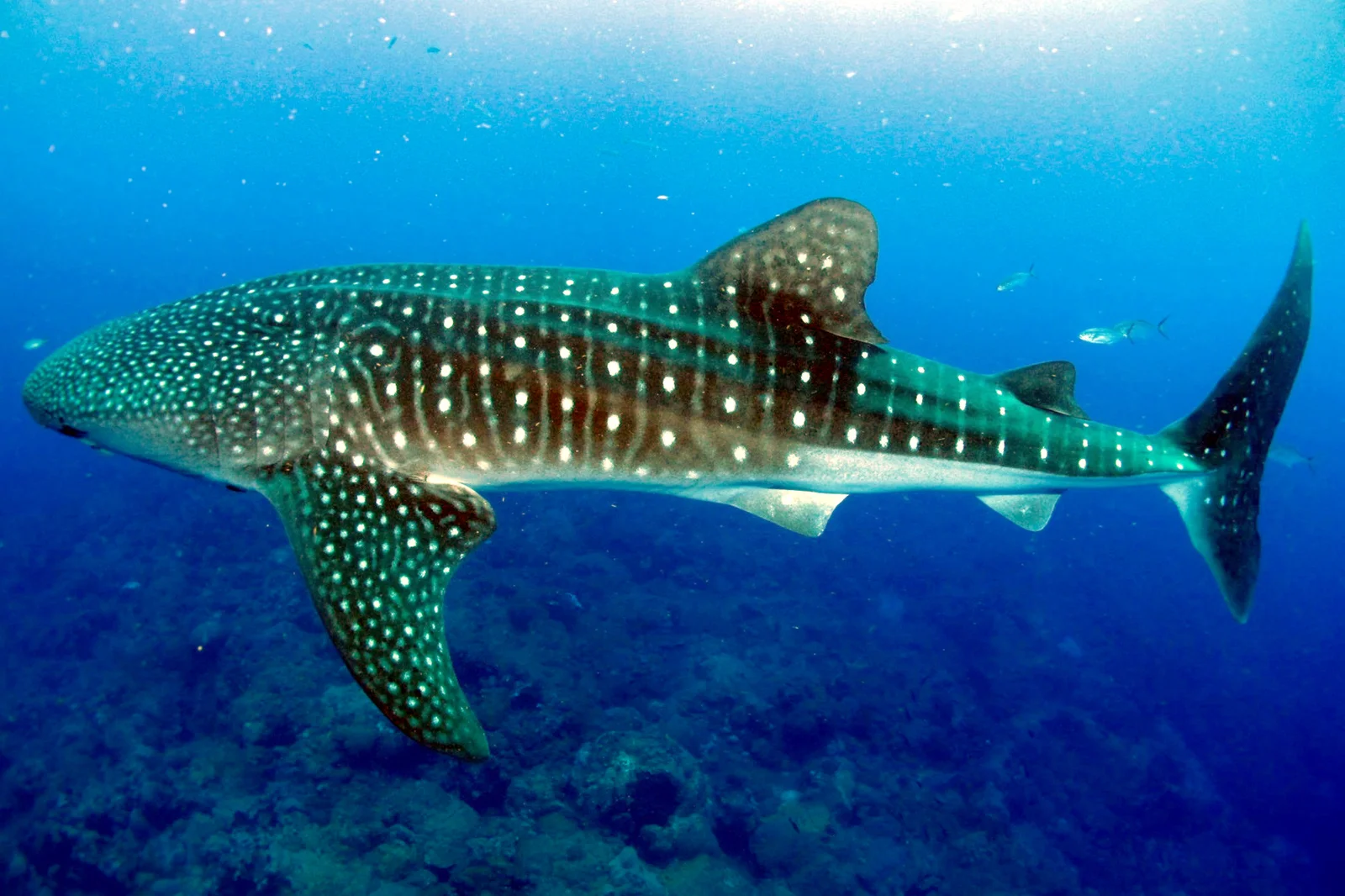
Adult whale shark (Rhincodon typus) gliding through Flower Garden Banks National Marine Sanctuary
The Lowdown
The whale shark (Rhincodon typus) represents one of nature’s most extraordinary evolutionary success stories, native to warm tropical and temperate open pelagic oceans, coral reef lagoons, and upwelling zones worldwide. Characterized by remarkable physiological adaptations, it commands a vital presence across its home territory.
Its ecological role revolves around a diet of microscopic zooplankton, fish eggs, krill, crab larvae, and schooling sardines. To thrive in competitive ecosystems, its primary evolutionary superpower is dermal denticles covering eyeball surfaces and thousands of tiny filtration pads processing over 600,000 liters of seawater per hour.
Biological Fact: Naturalists have recorded that whale sharks demonstrate unique physiological and communicative behaviors finely tuned to their native habitat.
As a keystone or iconic species within its ecosystem, the whale shark continues to inspire conservationists and naturalists worldwide with its distinctive presence and behavioral complexity.