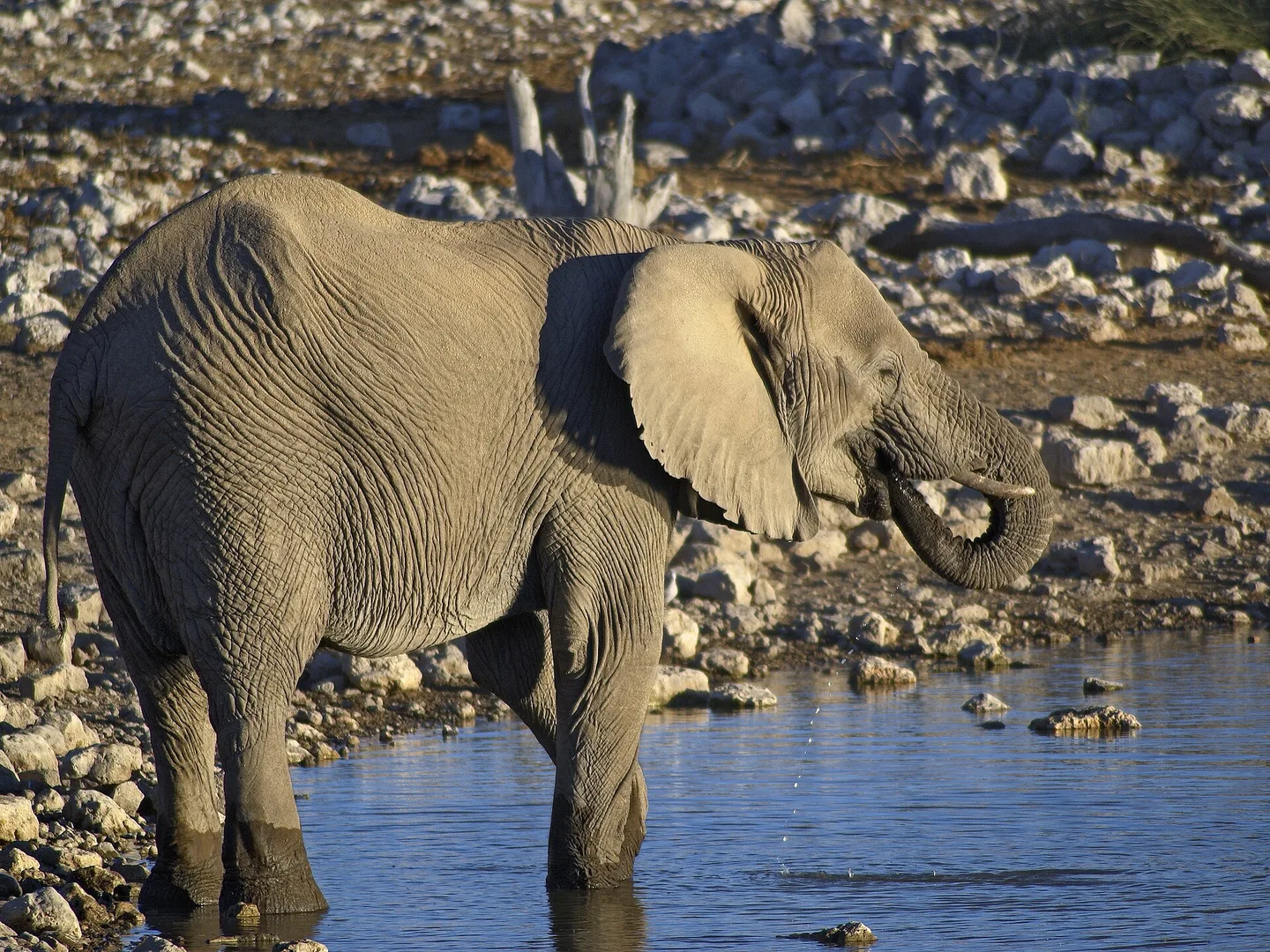
African Elephant drinking at the waterhole of Okaukuejo, Etosha, Namibia.
The Lowdown
The african bush elephant (Loxodonta africana) is one of the most iconic animals on Earth, thriving across savannas, open woodlands, marshes, and desert floodplains across sub-saharan africa. Shaped by millions of years of specialized adaptation, it possesses distinctive physical prowess and sensory acuity that make it a standout species of its ecosystem.
Its foraging and predatory strategy centers on grasses, tree foliage, bark, wild roots, and seasonal fruits (up to 300 lbs per day). To secure food and thrive in competitive ecological niches, its primary evolutionary superpower is pachyderm trunk with over 40,000 individual muscles and deep infrasound rumbles traveling through the ground up to ten miles.
Biological Fact: Field biologists have observed that african bush elephants utilize specialized behavioral adaptations to navigate territory and interact with their environment with remarkable precision.
Whether navigating changing climate patterns or participating in vital trophic networks, the african bush elephant plays an essential ecological role in its native habitat while continuing to captivate wildlife researchers and enthusiasts worldwide.