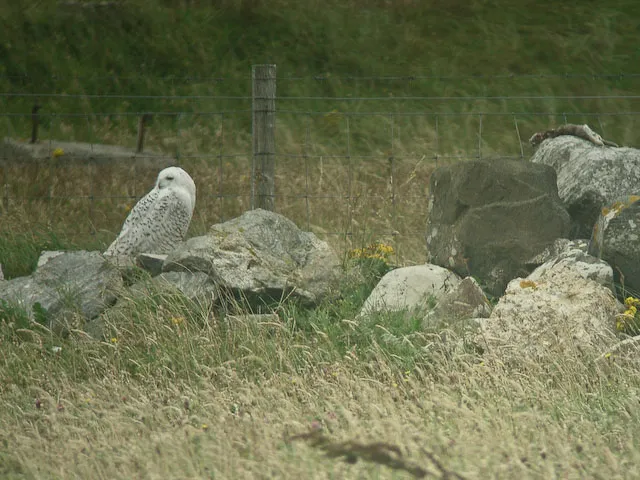
Snowy owl (Bubo scandiacus) This bird hung around for a long time.
The White Phantom of the Tundra
The Snowy Owl is engineered from beak to talon for high-latitude survival. Its dense plumage is the heaviest of any owl, covering its entire face, legs, and toes in thick insulating down. Unlike most owls that hunt strictly at night, the snowy owl hunts in the broad daylight of 24-hour Arctic summer sun, gliding soundlessly over the tundra.
Bio Fact: The leading edges of a snowy owl’s primary flight feathers feature fine, comb-like serrations that break turbulent air into micro-currents, muffling all flapping sound so prey never hears its approach.
3D Snow Sonar
The owl’s circular facial feathers act like acoustic satellite dishes, gathering faint sounds and directing them toward asymmetrical ear cavities located under its feathers. By calculating the microsecond difference in sound arrival between its left and right ears, the owl dives blindly through snowdrifts and grabs lemmings beneath the crust with precision.