The Lockpicking Night Bandit of Suburbia
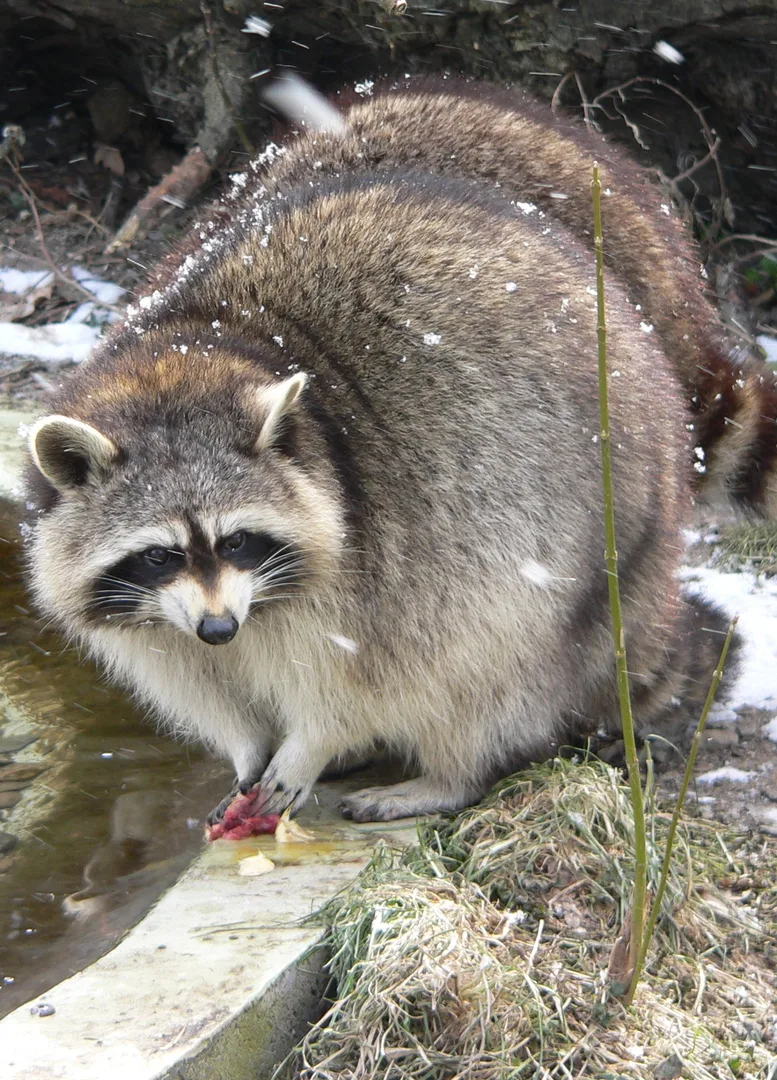
With its pitch-black eye mask and ringed tail, the Common Raccoon (Procyon lotor) looks like a mid-2000s alt-rock frontman who decided to dedicate its life to nocturnal guerrilla mischief. While humans view them as “trash pandas,” cognitive biologists consider them among the most tactically adept problem solvers in the mammalian kingdom.
In famous laboratory trials conducted in the early 20th century, raccoons were able to solve complex multi-stage puzzle boxes containing up to 11 different locking mechanisms (including bolts, latches, push-bars, and rotary dials), and remembered the exact sequence over a year later.
Seeing With Their Fingerprints
A raccoon’s front paws contain roughly four to five times more mechanoreceptor sensory cells than human fingertips. Nearly two-thirds of the somatosensory cortex in a raccoon’s brain is wired specifically to process tactile inputs from its paws.
The Water Myth: People often believe raccoons “wash” their food out of hygiene. In reality, wetting their paws softens the tough keratin layer on their palms, drastically increasing the electrical sensitivity of their nerve endings so they can literally “see” an object in 3D through touch alone.
Memory That Rivals Primates
Raccoons possess an uncanny ability to retain spatial navigation memories and puzzle solutions. Tests have demonstrated that raccoons can distinguish between varying quantities of objects and even utilize water displacement (the famous Aesop’s Fable test of dropping stones into a cylinder to raise water levels) to reach floating food rewards.