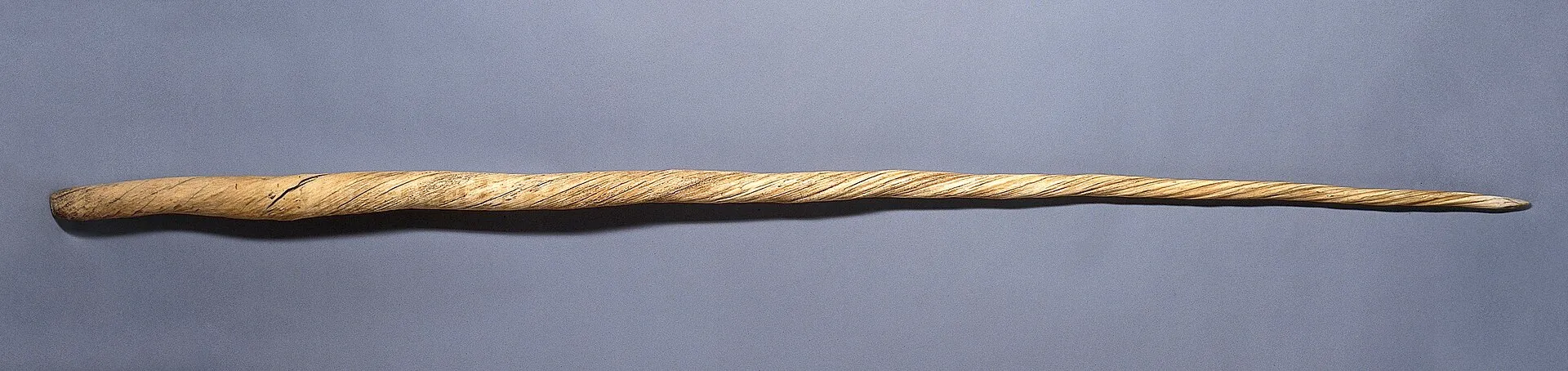
Horn of the narwhal (Monodon monoceros), or horn of the unicorn. Iconographic Collections
The Living Sensory Antenna
For centuries, Viking traders sold narwhal tusks as unicorn horns. In reality, the narwhal’s nine-foot helical spear is an overgrown left canine tooth that spirals straight out through its upper lip. Unlike human teeth with hard enamel on the outside, a narwhal tusk has a porous outer surface and ten million sensitive nerve pathways connecting directly to the whale’s brain.
Bio Fact: Narwhals dive to depths exceeding 5,000 feet beneath thick Arctic pack ice, holding their breath for nearly 30 minutes in near-total darkness while hunting Greenland halibut with hyper-precise echolocation clicks.
Ice Lead Communication
During the harsh Arctic summer, pods of narwhals travel through narrow cracks in the pack ice known as leads. They emit clicks, whistles, and deep tonal pulses to map out underwater ice formations, ensuring they never get trapped beneath solid freezing sheets.