The Oceanic Dragon of the Galápagos
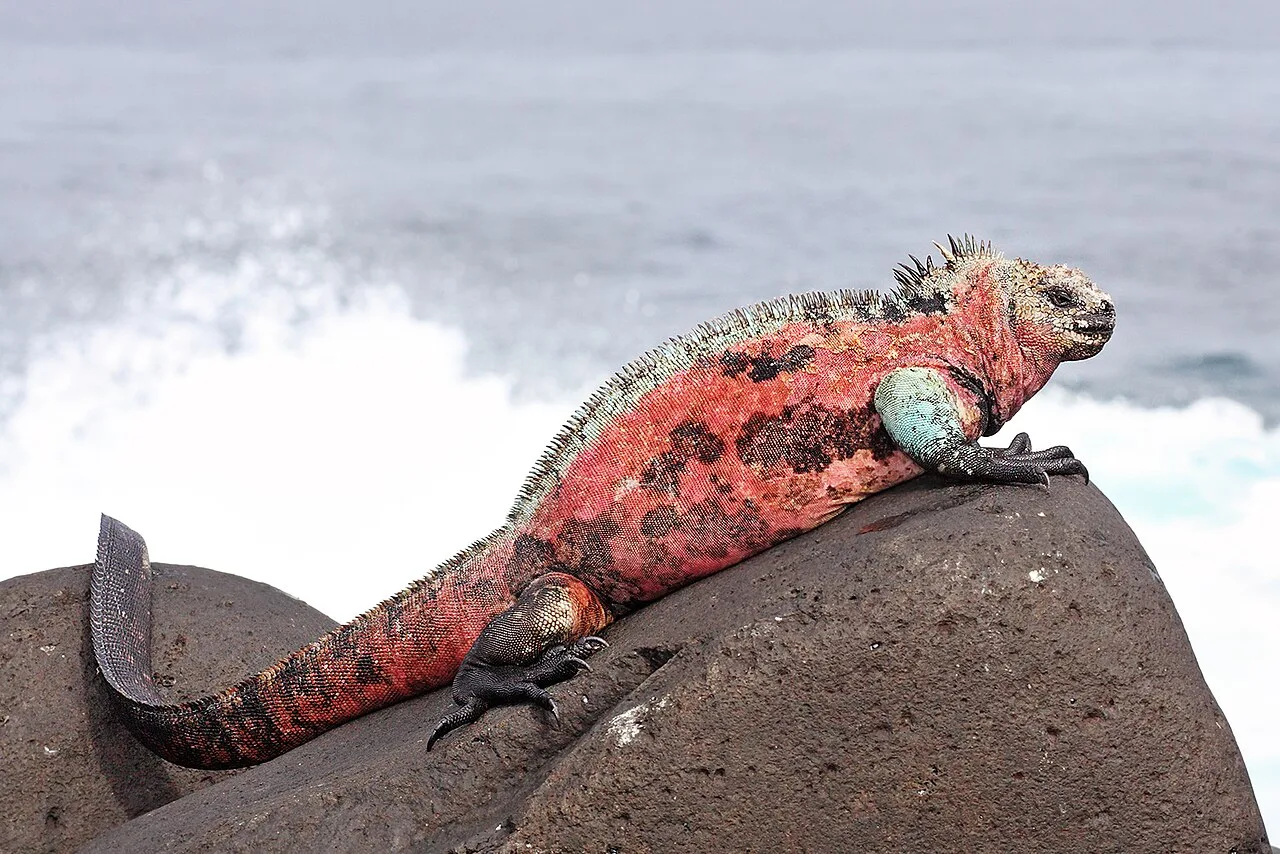
Found exclusively in the Galápagos archipelago, the marine iguana (Amblyrhynchus cristatus) is the only lizard on Earth that ventures into the open ocean to forage. Clad in charcoal-black scales that absorb solar radiation from volcanic lava rock, this extraordinary reptile swims with undulating, crocodile-like tail strokes through heavy crashing Pacific surf.
To graze on underwater algae pastures, adult marine iguanas dive to depths of 30 meters (98 feet), holding their breath for over 45 minutes by dramatically slowing their heart rate down to just a few beats per minute. Their razor-sharp, laterally flattened tricuspid teeth act like biological garden shears, scraping tough red and green macroalgae directly off submerged volcanic basalt while fighting violent subsea currents with curved, anchor-like claws.
Marine & Physiological Adaptations:
- Dive Ceiling: Depths up to 30 meters (98 feet) and 45-minute breath-hold endurance
- Skeletal Shrinkage: Reabsorbs bone mass to shrink up to 20% in body length during El Niño famines
- Salt Expulsion: Cranial nasal glands fire pressurized saline geysers up to 30 cm
- Thermal Solar Charging: Black basalt-matching scales warm core body to 36°C after icy dives
Cranial Salt Sneeze and Skeletal Shrinking
Ingesting massive quantities of seawater while feeding on marine algae exposes the iguana to lethal concentrations of dietary sodium. To prevent kidney failure, specialized cranial salt glands connected to its nostrils extract salt ions from the bloodstream. When pressure builds, the iguana violently sneezes concentrated white saline spray into the air, creating a distinctive crust of white salt crystals across its forehead.
During El Niño weather events when warm ocean currents wipe out cold-water algae beds, marine iguanas perform one of biology’s most astonishing survival tricks: they shrink. Rather than simply losing fat, they reabsorb actual bone matrix from their vertebrae and limbs, reducing their total body length by up to 20 percent. When cold, nutrient-rich upwellings return and algae pastures recover, their bones regrow to full size.