The Fractal Nomad of the Indian Scrublands
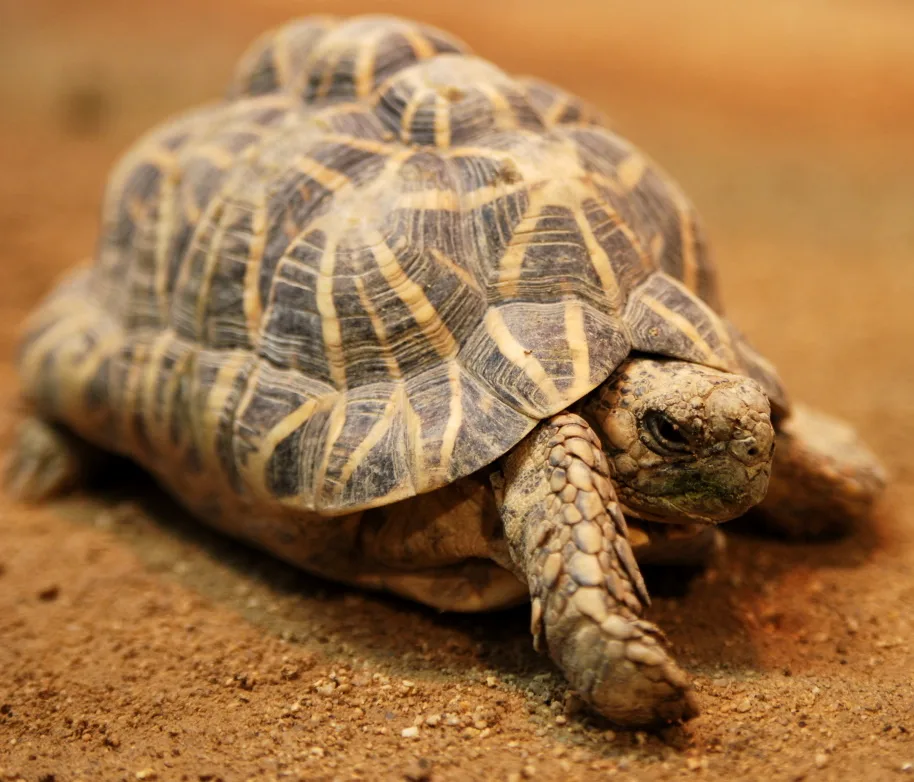
Roaming the sun-baked scrub forests and dry thorn plains of the Indian subcontinent, the Indian star tortoise (Geochelone elegans) carries one of the most mesmerizing shells in the natural world. Each dark carapace scute rises into a distinct conical pyramid, radiating bold yellow and creamy-white starburst lines across a deep brown-black background.
While this pattern appears striking up close, in its natural habitat of dry yellow grasses and dappled shade under acacia trees, the starburst geometry functions as flawless disruptive camouflage. The radiating star lines break up the tortoise’s outline, tricking the eyes of aerial raptors and jackals by making the rounded shell resemble a scattered cluster of dry plant stems and jagged sunbeams.
Morphological & Survival Specs:
- Pyramid Cones: High conical scutes act as thermal radiators and self-righting levers
- Self-Righting Physics: High dome geometry allows the tortoise to roll upright if flipped
- Water Conservation: Excretes insoluble uric acid to eliminate waste with minimal water loss
- Lifespan: Exceeds 50 to 80 years in natural semi-arid habitats
Thermal Pyramids and Monsoon Awakening
The raised pyramids on the star tortoise’s carapace serve a vital thermoregulatory function. In the extreme heat of the Indian summer where ambient temperatures soar past 42 degrees Celsius (108 Fahrenheit), the peaked cones increase total shell surface area, allowing heat to dissipate rapidly into evening breezes while minimizing internal organ exposure to direct sunlight.
When the heavy rains of the southwest monsoon arrive, star tortoises experience an explosive burst of activity. Emerging from dense thorn bushes, they drink deeply from temporary rainwater pools, graze on fresh green grass shoots, and court mates across the revitalized landscape before returning to their quiet, solitary nomad routine.