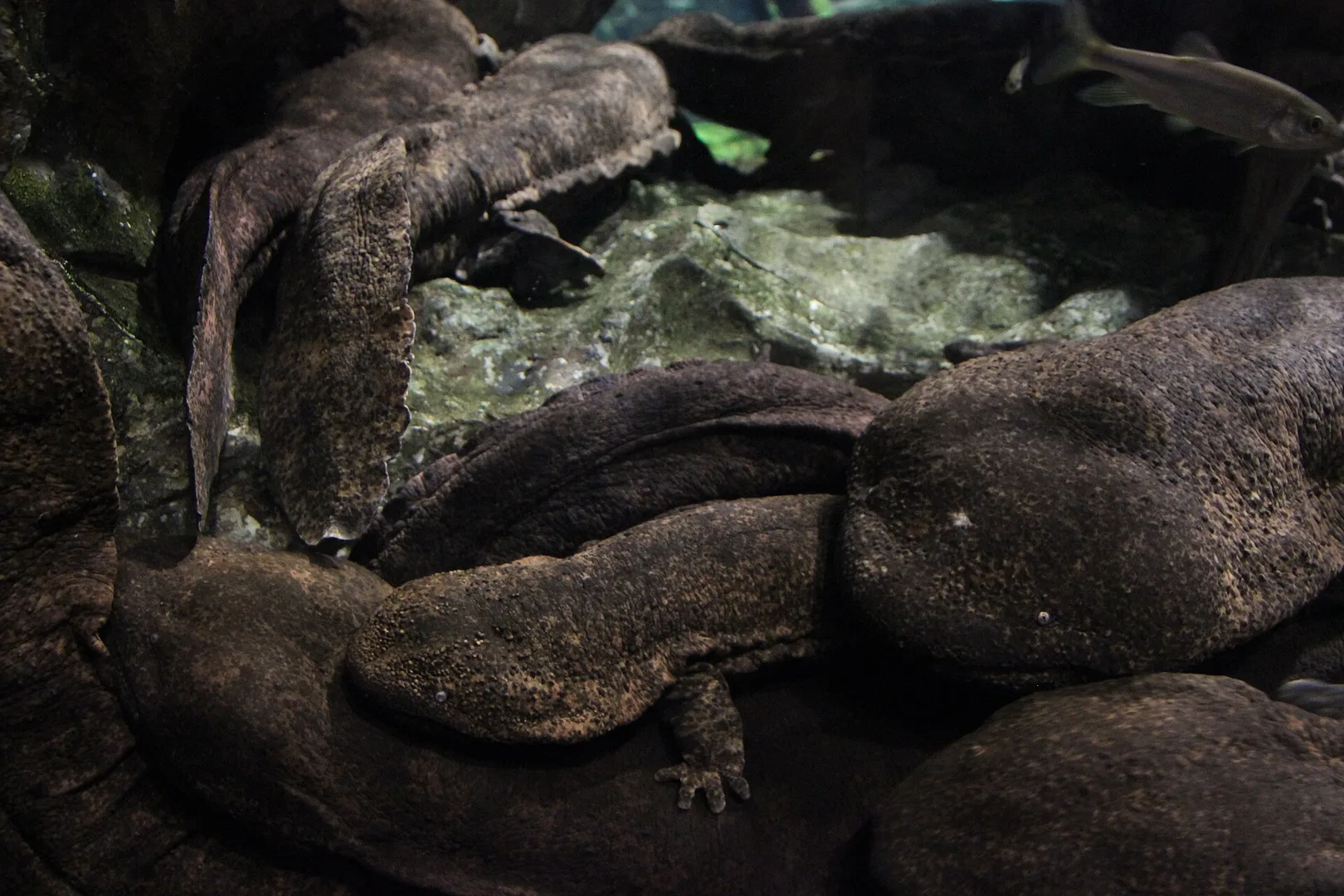
Japanese Giant Salamaders (Andrias japonicus) at the Kyoto Aquarium
The Lowdown
Known in Japan as Ōsanshōuo (giant pepper fish), the Japanese giant salamander (Andrias japonicus) is the second-largest amphibian on Earth, reaching lengths of up to five feet and weighing nearly fifty pounds. Unchanged for over twenty million years, it represents an ancient lineage of primitive amphibians.
Possessing poor eyesight and rudimentary lungs, it relies almost entirely on cutaneous respiration, absorbing dissolved oxygen directly from icy, fast-flowing mountain streams through deeply wrinkled, slimy skin folds. Rows of sensory tubercles along its head and lateral line detect minute micro-vibrations generated by moving prey in pitch-black waters.
Biological Fact: When threatened, the Japanese giant salamander secretes a thick, milky white mucus that smells strongly of Japanese mountain pepper (sanshō).
During late summer breeding seasons, dominant males (known as ‘den masters’) guard underwater stone nesting cavities, fiercely defending thousands of fertilized eggs from predators and other males for over two months until hatching.