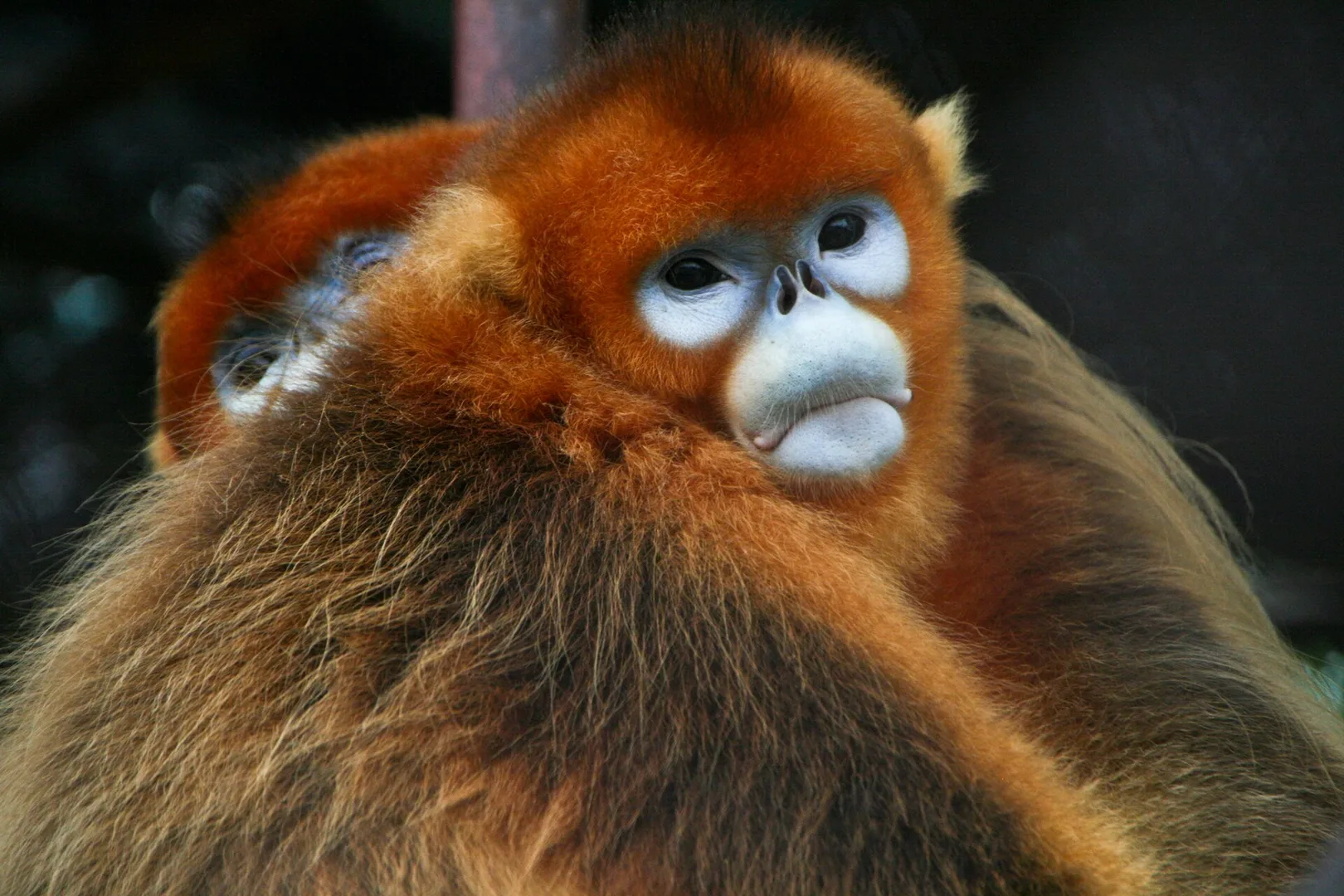
Golden Snub-nosed Monkeys, Rhinopithecus roxellana in captivity outside of Xi'An, China. Endangered.
The Lowdown
The golden snub-nosed monkey (Rhinopithecus roxellana) represents one of nature’s most extraordinary evolutionary success stories, native to temperate montane broadleaf and coniferous forests between 1,500 and 3,300 meters in the qinling and shennongjia mountains of china. Characterized by remarkable physiological adaptations, it commands a vital presence across its home territory.
Its ecological role revolves around a diet of tree lichens, conifer needles, bamboo shoots, wild cherries, bark cambium, and seasonal fruits. To thrive in competitive ecosystems, its primary evolutionary superpower is reticulated blood vessel network beneath facial skin that prevents frostbite at -20°c, paired with snubbed nasal bones that protect the nose from frozen wind.
Biological Fact: Naturalists have recorded that golden snub-nosed monkeys demonstrate unique physiological and communicative behaviors finely tuned to their native habitat.
As a keystone or iconic species within its ecosystem, the golden snub-nosed monkey continues to inspire conservationists and naturalists worldwide with its distinctive presence and behavioral complexity.