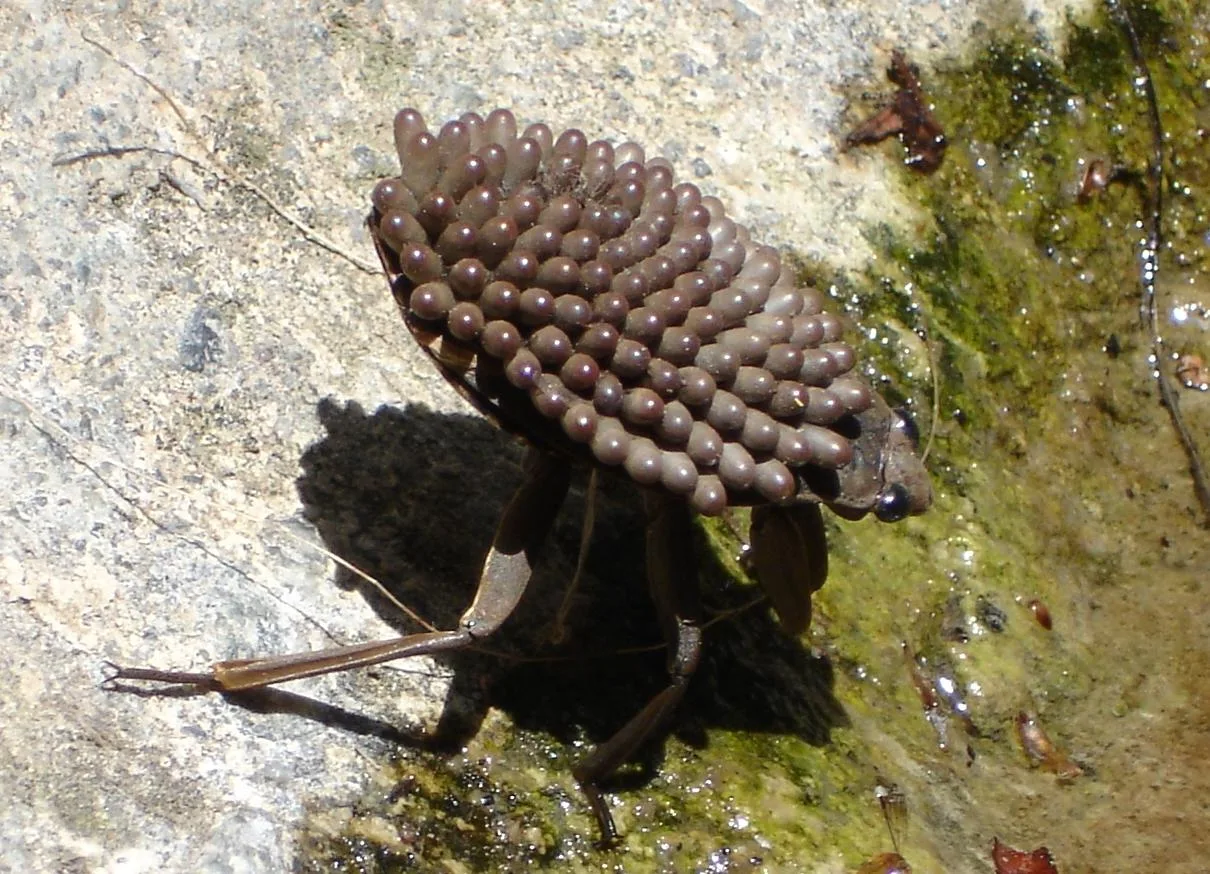
Giant Water Bug (photo taken by flickr user noisecollusion).
The Submerged Hypodermic Assassin
Dwelling in the murky shallows of freshwater ponds and slow-moving streams, the giant water bug (Belostomatidae) ranks among the largest predatory insects on Earth. Reaching lengths of over 10 centimeters (4 inches), this aquatic hunter stalks submerged vegetation using enormous raptorial front legs engineered to snatch quarry in less than 30 milliseconds.
When seizing minnows, frogs, or juvenile turtles, the giant water bug drives a needle-sharp piercing beak called a rostrum through its victim’s skin. Rather than chewing flesh, it pumps a devastating cocktail of neurotoxic saliva and liquefied proteolytic enzymes directly into the prey’s muscle tissue. Within minutes, internal organs dissolve into a nutrient-rich slurry that the bug vacuums through its straw-like mouthparts.
Predatory Strike Mechanics:
- Grappling Force: Raptor forelegs generate clamp force exceeding 50 times its body mass
- Strike Speed: Ambush grab completed in under 30 milliseconds
- Prey Liquefaction: Internal organs fully digested in under 10 minutes
- Flight Capability: Massive concealed wings allow long-distance night flight between ponds
Respiratory Snorkels and Dedicated Paternal Care
Despite spending months underwater, the giant water bug breathes atmospheric air. It positions its abdomen just below the water’s surface, extending a pair of retractable, tube-like siphon appendages that function like a submarine snorkel to channel oxygen into thoracic spiracles. At night, mature adults launch out of the water on broad, powerful flight wings, often circling streetlamps and earning them the nickname electric-light bugs.
Reproduction in many belostomatid species features one of the most dedicated forms of paternal care in the insect kingdom. Females glue up to 100 large eggs directly onto the male’s flat back using a waterproof protein glue. The male carries, grooms, and aerates the brood for weeks, constantly stroking freshwater currents across the clutch until every nymph successfully hatches.