The Walking Graveyard of the Scrublands
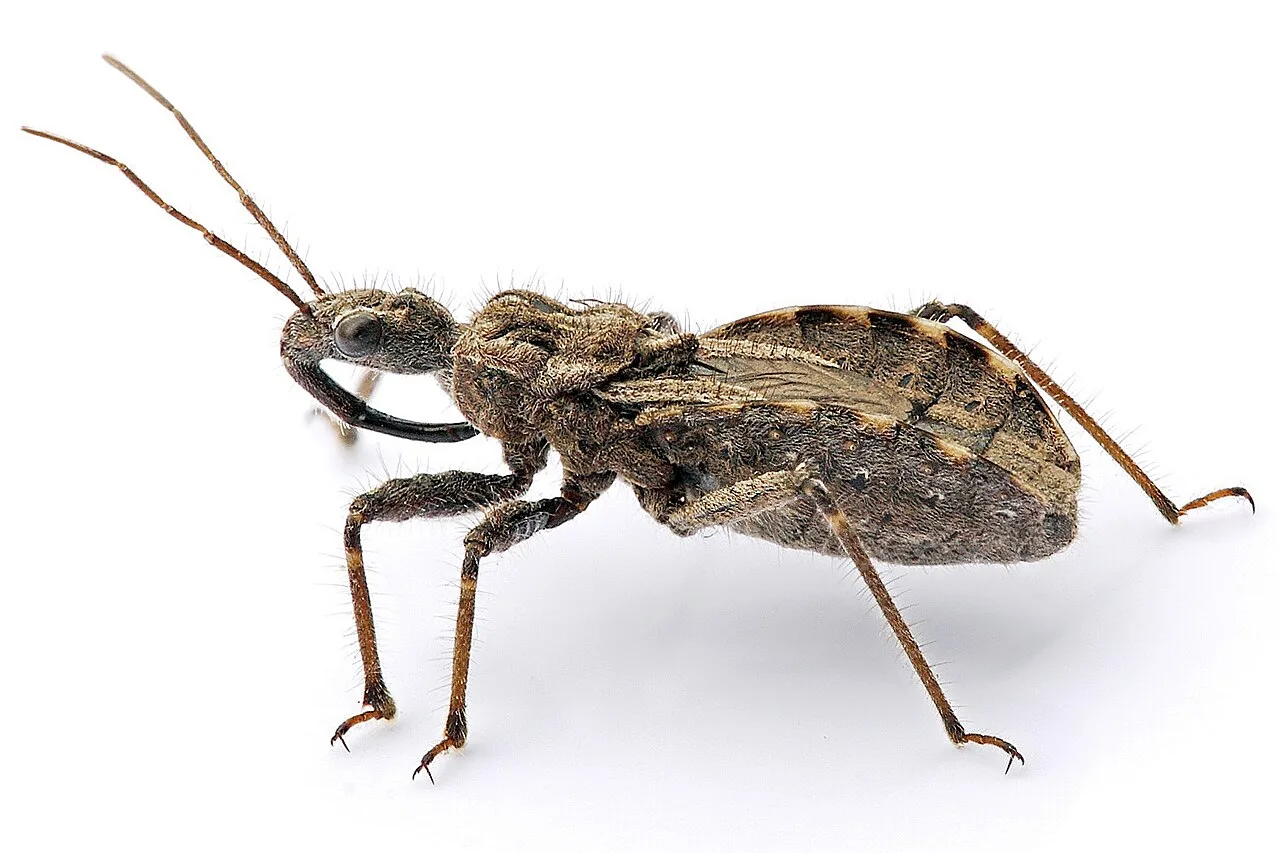
Among the thousands of predatory true bugs in the family Reduviidae, Acanthaspis petax stands out for its morbidly brilliant camouflage strategy.
As a nymph, this insect hunts worker ants. After ambushing a victim, it injects digestive enzymes that liquefy the ant’s internal tissues within seconds, sucking the carcass dry before cementing the hollow exoskeleton onto its back using a sticky glandular secretion.
The Corpse Tower Defense System
An individual nymph can accumulate a towering stack of more than twenty dried ant carcasses on its abdomen, creating a shield larger than its own body.
This corpse armor serves two vital functions: chemical camouflage that masks the bug’s scent from wandering ant patrols, and visual confusion against predatory jumping spiders. When a jumping spider attacks the mound, it grabs a loose ant shell instead of the bug, allowing the assassin bug to escape.
The Dagger-Like Rostrum Strike
Equipped with a curved, three-segmented piercing beak called a rostrum, the assassin bug strikes in less than 50 milliseconds.
Its venomous saliva contains a cocktail of potent neurotoxins that paralyze the nervous system, paired with proteases that dissolve muscle and connective tissue into a liquid broth that the bug siphons through its hollow rostrum.