The Sandstone Parkour Specialist
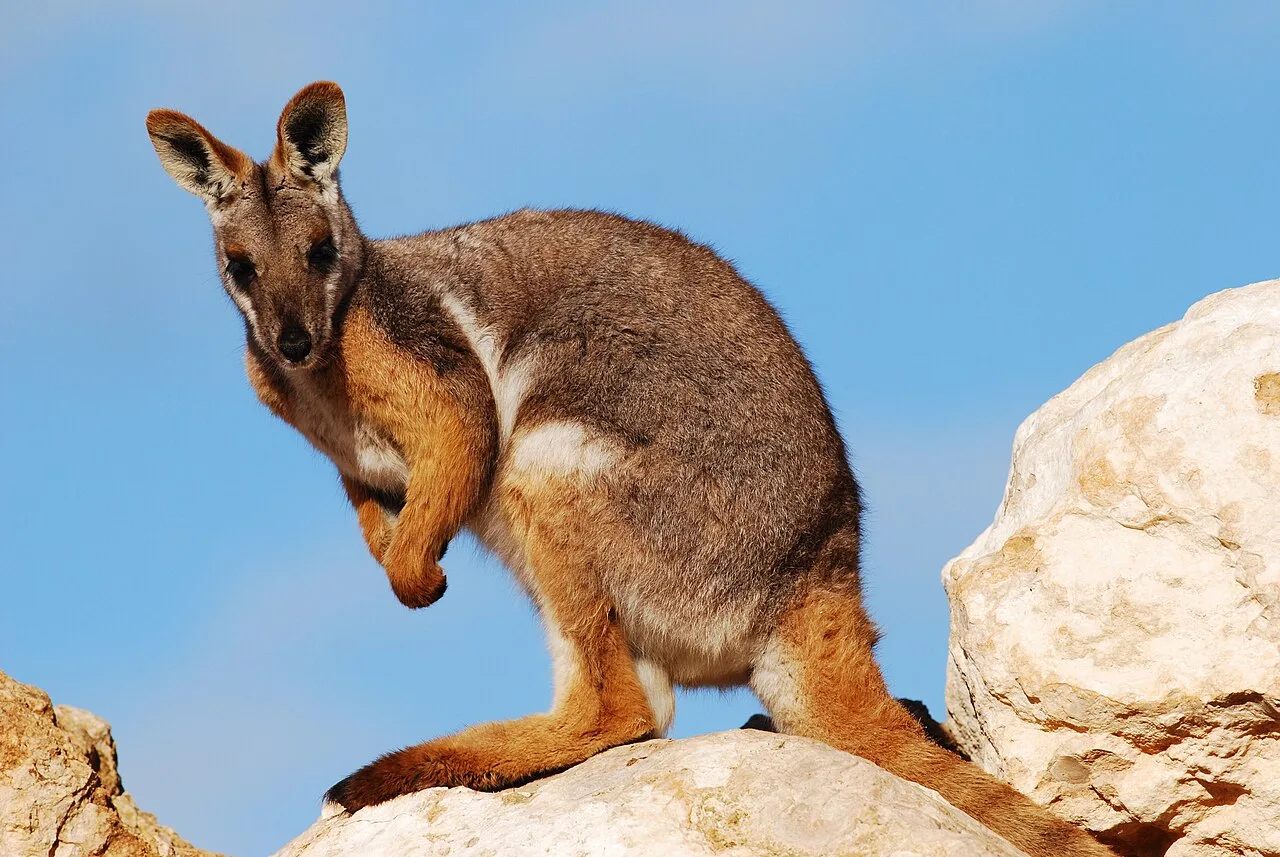
Navigating the vertical red gorges of the Australian outback, the yellow-footed rock-wallaby (Petrogale xanthopus) turns sheer stone cliffs into elevated racetracks. Sporting brilliant golden-yellow forelimbs, vibrant white facial stripes, and a dense tail ringed in alternating dark brown and gold bands, this medium-sized macropod is widely celebrated as the most visually striking kangaroo relative in Australasia.
Unlike plains-dwelling red kangaroos that possess elongated feet for horizontal energy efficiency, rock-wallabies have evolved short, heavily padded hind feet covered in specialized textured dermal granules. These granulated soles grip smooth quartzite and crumbly sandstone like high-friction climbing rubber, allowing the wallaby to leap 4 meters (13 feet) between narrow ledges without slipping.
Climbing & Metabolic Metrics:
- Foot Grip Friction: Textured dermal pads provide 3x the friction coefficient of smooth skin
- Horizontal Jump: Up to 4 meters across open gorge chasms
- Tail Counterbalance: 60 cm striped muscular tail stabilizes high-speed bank turns
- Water Efficiency: Kidneys concentrate urine to survive hyper-arid summer droughts
Thermal Shelters and Colony Survival
During scorching summer days where ambient gorge temperatures exceed 45 degrees Celsius (113 Fahrenheit), yellow-footed rock-wallabies retreat deep into deep boulder crevices and sandstone cave systems. These thermal refuges remain up to 20 degrees cooler than the exposed cliff faces, drastically reducing metabolic water loss.
Living in cohesive family colonies, rock-wallabies maintain strict territory boundaries along permanent rock waterholes. When wedge-tailed eagles or dingoes approach, sentry wallabies thump their heavy muscular tails against the hollow rock shelves, sending booming seismic warning vibrations echoing through the canyon to alert the entire troop.