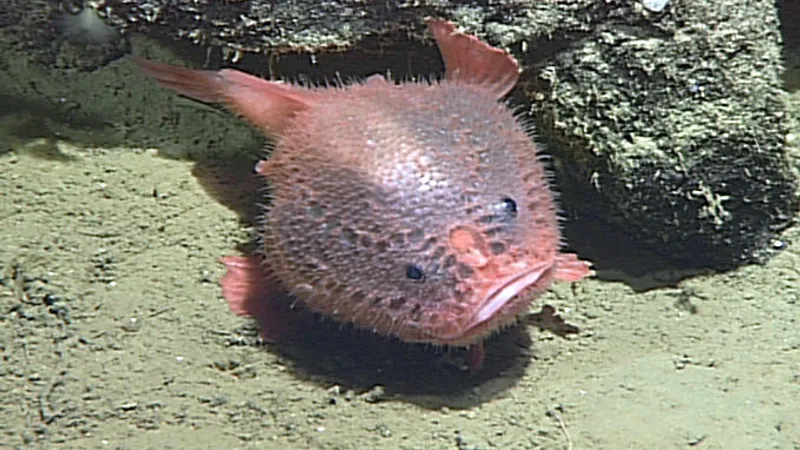
Warty frogfish displaying extended illicium fishing lure above cavernous jaws
The Lowdown
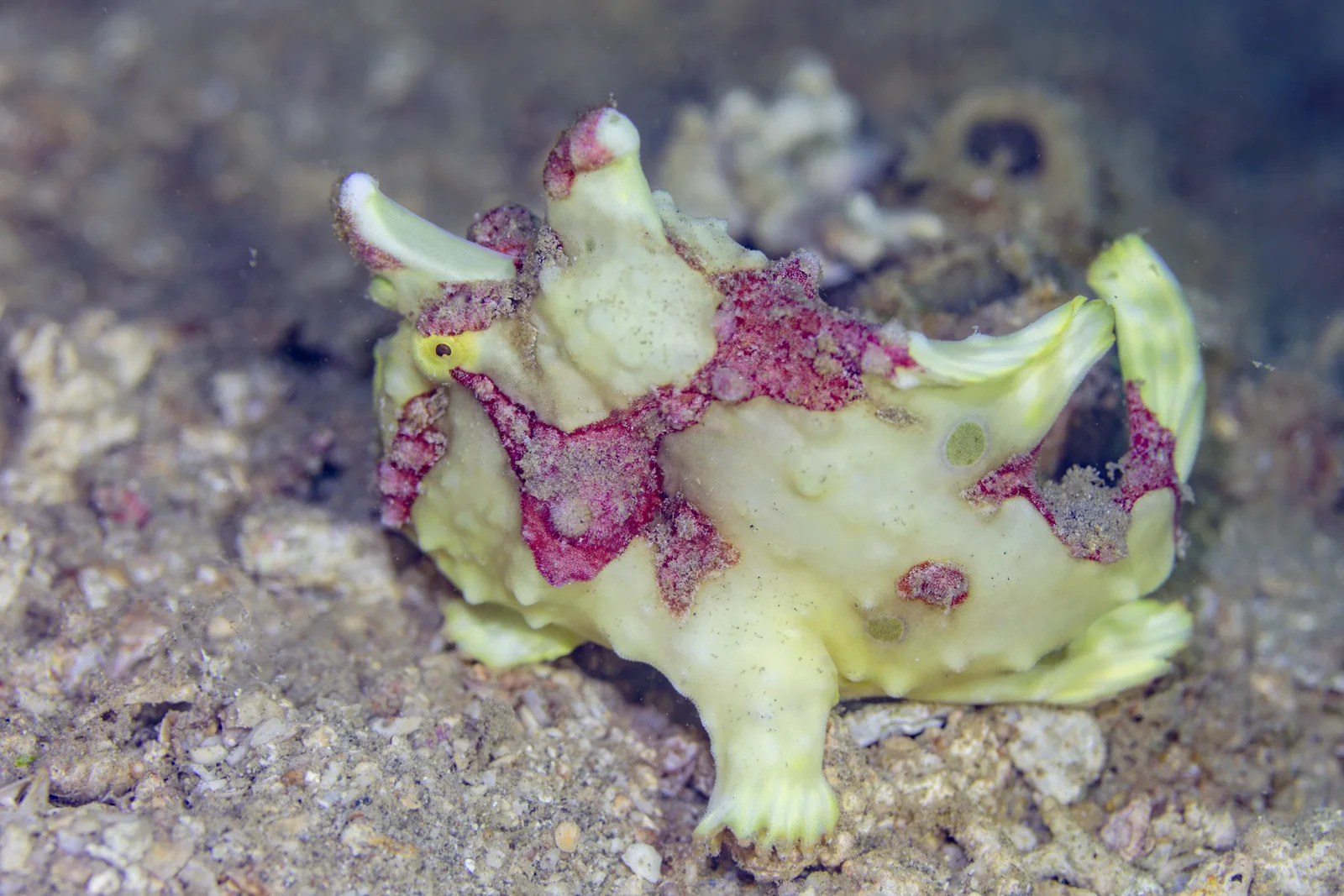
The striated frogfish (Antennarius striatus), also known as the hairy frogfish, is a masterclass in predatory stealth and biomechanical acceleration. Inhabiting shallow reefs, sandy sea bottoms, and weed-covered rocky rubble across tropical and subtropical oceans worldwide, this bizarre bottom-dweller has abandoned swimming in favor of walking along the seabed on modified, elbowed pectoral and pelvic fins.
Disguised with filamentous dermal appendages that mimic algae, toxic sponges, or coral rubble, the frogfish remains motionless until prospective prey wanders into range.
       [Illicium Spine]
             \
              (Esca Worm Lure) ~ ~ ~
               \
      [Eye]     \
       (o)       \___
      /              \
     |   [6ms Jaws]   |=======( Body )======[Tail]
      \ ____________ /
         ||        ||
    [Pectoral]  [Pelvic]
     (Walking 'Legs')
The 6-Millisecond Vacuum Maw
While most predators rely on chase speed or crushing bite force, the frogfish deploys the fastest predatory strike recorded among vertebrate animals:
- The Active Lure: The frogfish dangles its illicium (a modified first dorsal spine) tipped with an esca, a fleshy appendage resembling a wriggling polychaete worm, shrimp, or small fish.
- The 6ms Strike: When an unsuspecting damselfish or goby investigates the bait, the frogfish drops its lower jaw and expands its oral cavity up to twelve times its resting volume in roughly 6 milliseconds.
- Catastrophic Inflow: The rapid expansion creates an immense pressure differential, pulling water and the prey directly into the gullet before the victim can register the movement.
- Elastic Stomach: Like its deep-sea relatives, the frogfish features a highly distensible stomach, enabling it to swallow prey up to twice its own body length.
Walking Without Swimming
Having reduced swim bladders and heavy globular bodies, frogfishes rarely swim through the water column. Instead, they use their leg-like limb fins to crawl over reefs. When rapid relocation is required, they inhale water through their cavernous mouths and forcefully expel it through narrow, backward-facing gill openings positioned behind their pectoral fins, generating jet propulsion across the seafloor.