The Biological Moonwalk
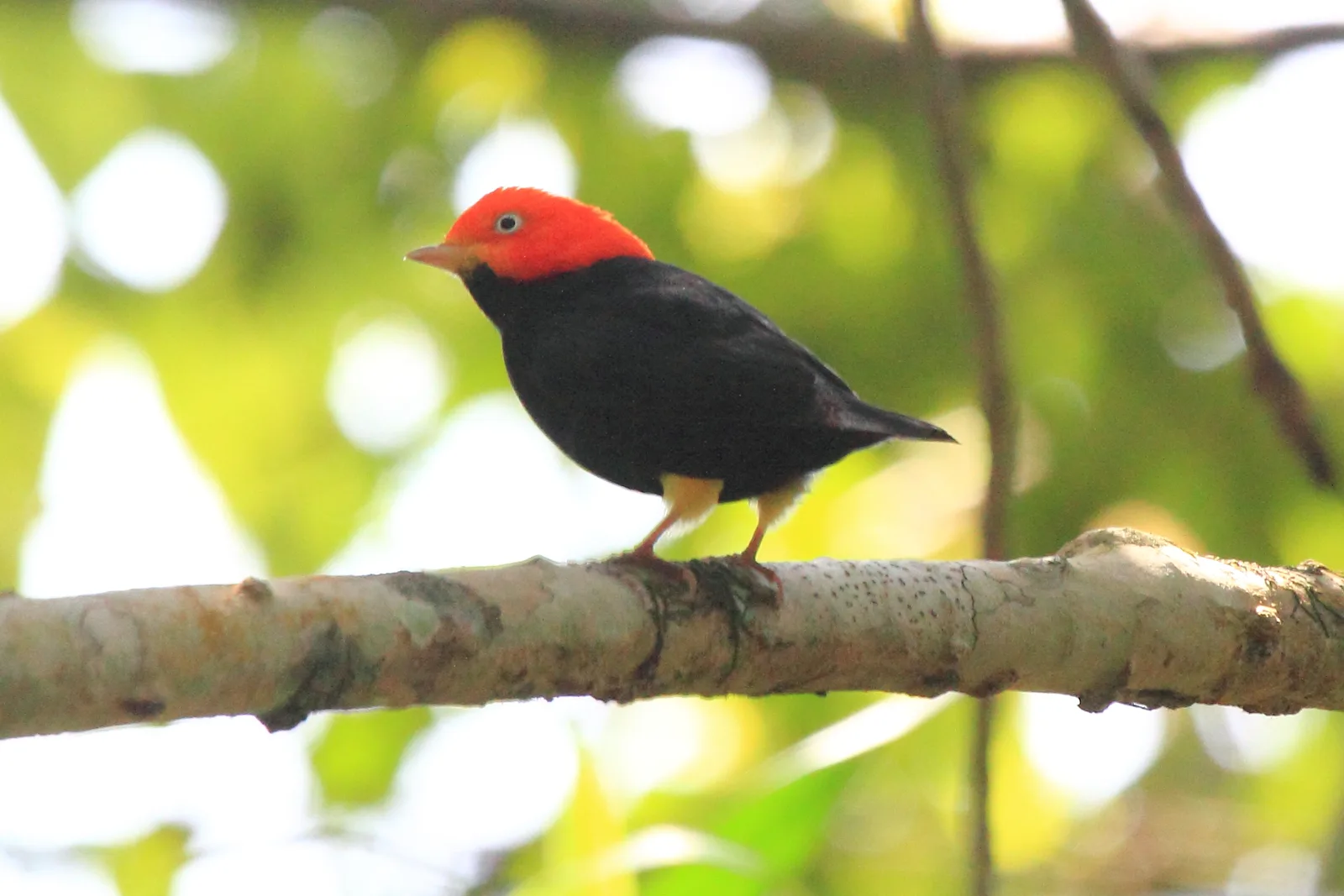
Deep in the humid tropical understory of Central America, male red-capped manakins gather in communal display arenas called leks. Each male stakes out a clean horizontal perch 5 to 10 meters above the forest floor. When a female arrives, the bird erupts into high-velocity cursorial dance.
Tucking its head low, the male rapidly shuffles its feet backwards along the bark. Moving at up to 80 steps per second, the steps are so rapid that the human eye perceives only a smooth, effortless backward glide along the branch.
Bio-Acoustic Wing Snaps
The display is accompanied by sharp percussion. Red-capped manakins possess modified secondary flight feathers with thickened, curved central shafts. By clapping its wings over its back at speeds exceeding 60 milliseconds per cycle, the male generates explosive snap-crack sounds that resonate across the jungle canopy.
These mechanical sounds, known as sonations, function as biological drumbeats. Combined with flashes of bright yellow thigh feathers exposed during deep crouches, the performance stimulates female mate choice through sensory overload.
Diet and Jungle Seed Dispersal
Outside of lekking displays, red-capped manakins feed primarily on understory berries, particularly from the melastome and rubiaceae plant families. They snatch fruit while hovering briefly in mid-air before swallowing it whole.
Because fruit passes through their specialized short digestive tract in less than 20 minutes, manakins deposit undamaged seeds across wide forest territories, making them key regenerators of primary tropical rainforests.