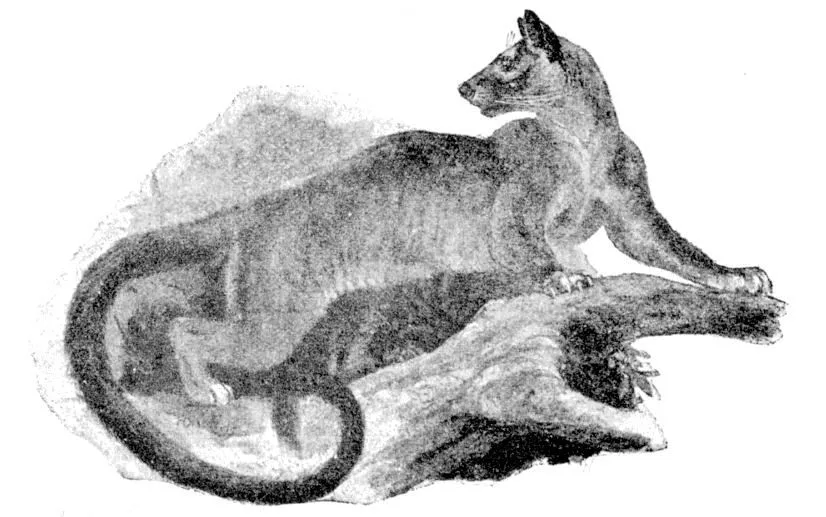
.mw-parser-output .smallcaps{font-variant:small-caps}Fig. 199.—Fossa. Cryptoprocta ferox. × 1⁄6.
The Lowdown
The fossa (Cryptoprocta ferox) represents one of nature’s most extraordinary evolutionary success stories, native to dense lowland and montane rainforests, dry deciduous forests, and spiny thickets across madagascar. Characterized by remarkable physiological adaptations, it commands a vital presence across its home territory.
Its ecological role revolves around a diet of over 50% lemurs (from mouse lemurs to large sifakas), tenrecs, rodents, and roosting forest birds. To thrive in competitive ecosystems, its primary evolutionary superpower is flexible reversible ankle joints and a tail as long as its entire body that acts as a counterweight during 30 mph vertical tree pursuits.
Biological Fact: Naturalists have recorded that fossas demonstrate unique physiological and communicative behaviors finely tuned to their native habitat.
As a keystone or iconic species within its ecosystem, the fossa continues to inspire conservationists and naturalists worldwide with its distinctive presence and behavioral complexity.