The Parietal “Third Eye”
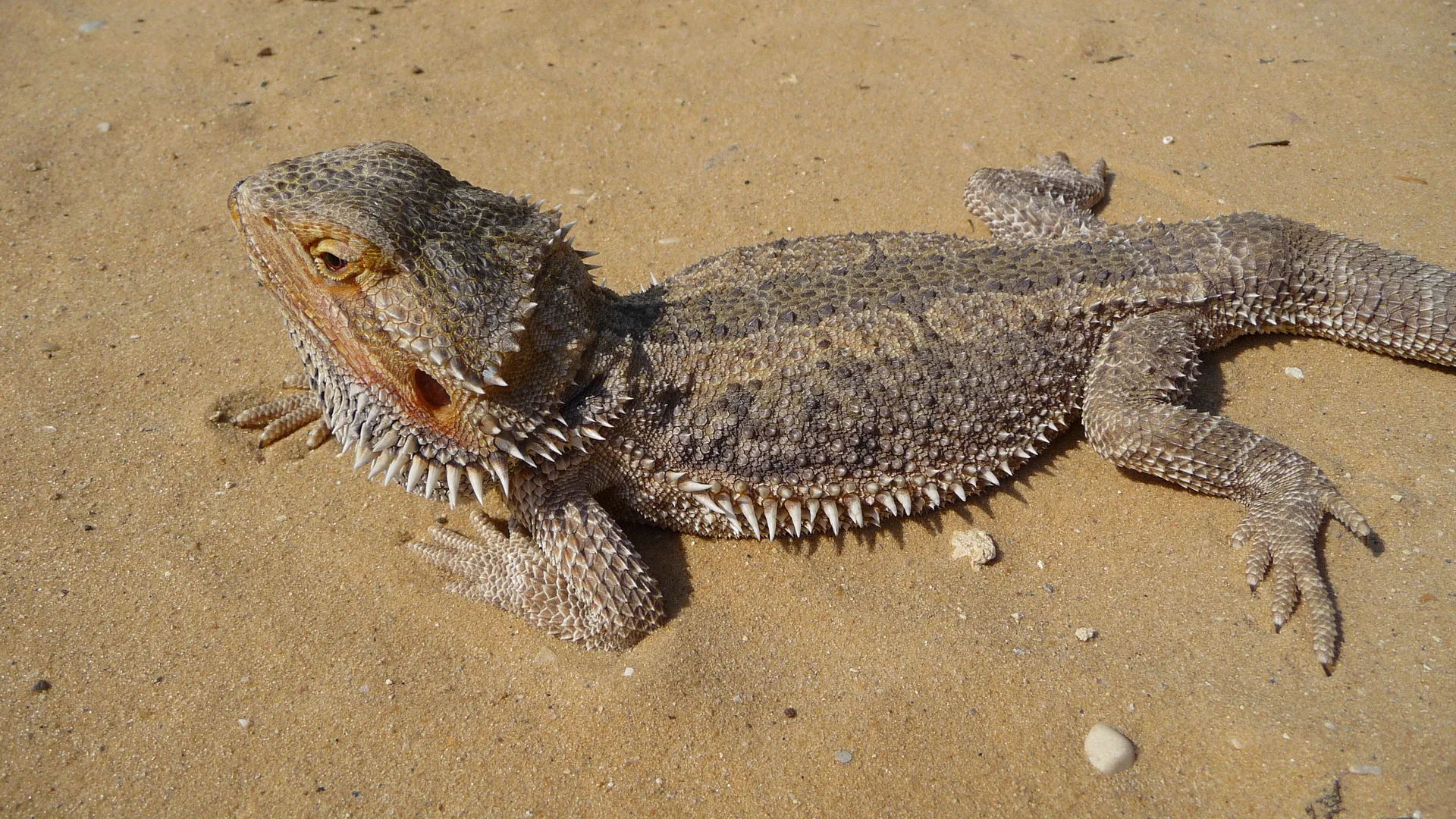
On the very top of a Central Bearded Dragon’s (Pogona vitticeps) head sits a tiny, translucent gray spot called the parietal eye (or third eye). Connected directly to the pineal gland in the brain, it contains a primitive lens and retina that detects changes in light and shadows, instantly warning the dragon if a predatory bird is swooping down from above.
“Bearded dragons communicate through two signature gestures: ‘head-bobbing’ to establish confidence, and slow-motion ‘arm-waving’ (raising one front leg in a circle) to say ‘I see you and I mean no harm’.”
Dynamic Color & Mood Regulation
The “beard” under their chin is covered in specialized spiky scales. When feeling defensive or territorial, the dragon inflates its throat beard, turning it jet black by expanding melanin pigment cells. Under basking heat lamps, their skin lightens to reflect sunlight and regulate core body temperature.